

Same topics but a broader perspective. For a while now, I’ve been feeling that the ‘metaverse’ was a worn out term as reflected in some of my recent posts.
Perhaps no one popularized the metaverse more than Matthew Ball in his 2022 book The Metaverse: And How It Will Revolutionize Everything. (Well, there was Zuckerberg changing the entire name of his company to Meta.) While the metaverse revolution fizzled into a slow simmer as AI has gotten all the attention, advances are still progressing. I intend to talk more about the research and possibilities in gaming, 3D graphics, optical engineering, mixed reality, and the open standards that make those experiences possible. But the metaverse as a term holds some people back. A February 2026 post on Stratechery where Ben Thompson interviews Matthew Ball, ends with this observation:
Thompson: Is the metaverse dead?
Ball: … Do I think the term is pretty darn buried? Yeah. So it goes, that’s language.
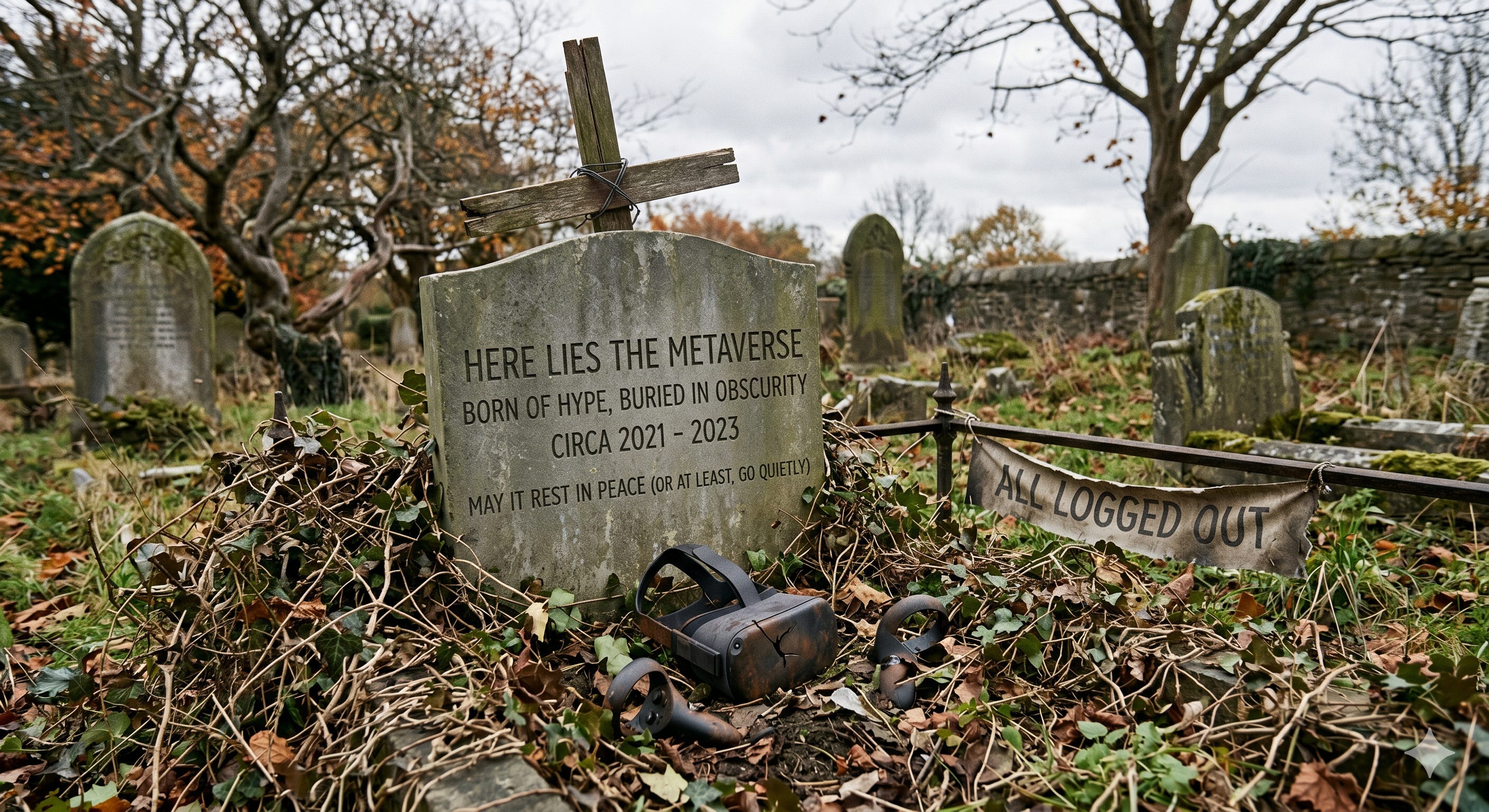
The metaverse as a term has gone quietly away. Yet, at this year’s WWDC, Apple highlighted several capabilities of its VisionOS. While some VR studios have closed shop, others are persevering through this VR winter, just as there was an AI winter.
Spatial Computing is the term that Apple seems to have settled on for its computing platform that extends beyond mobile and desktop. Some people say that Apple has abandoned VisionOS but announcements from Apple’s annual developer conference WWDC say otherwise.
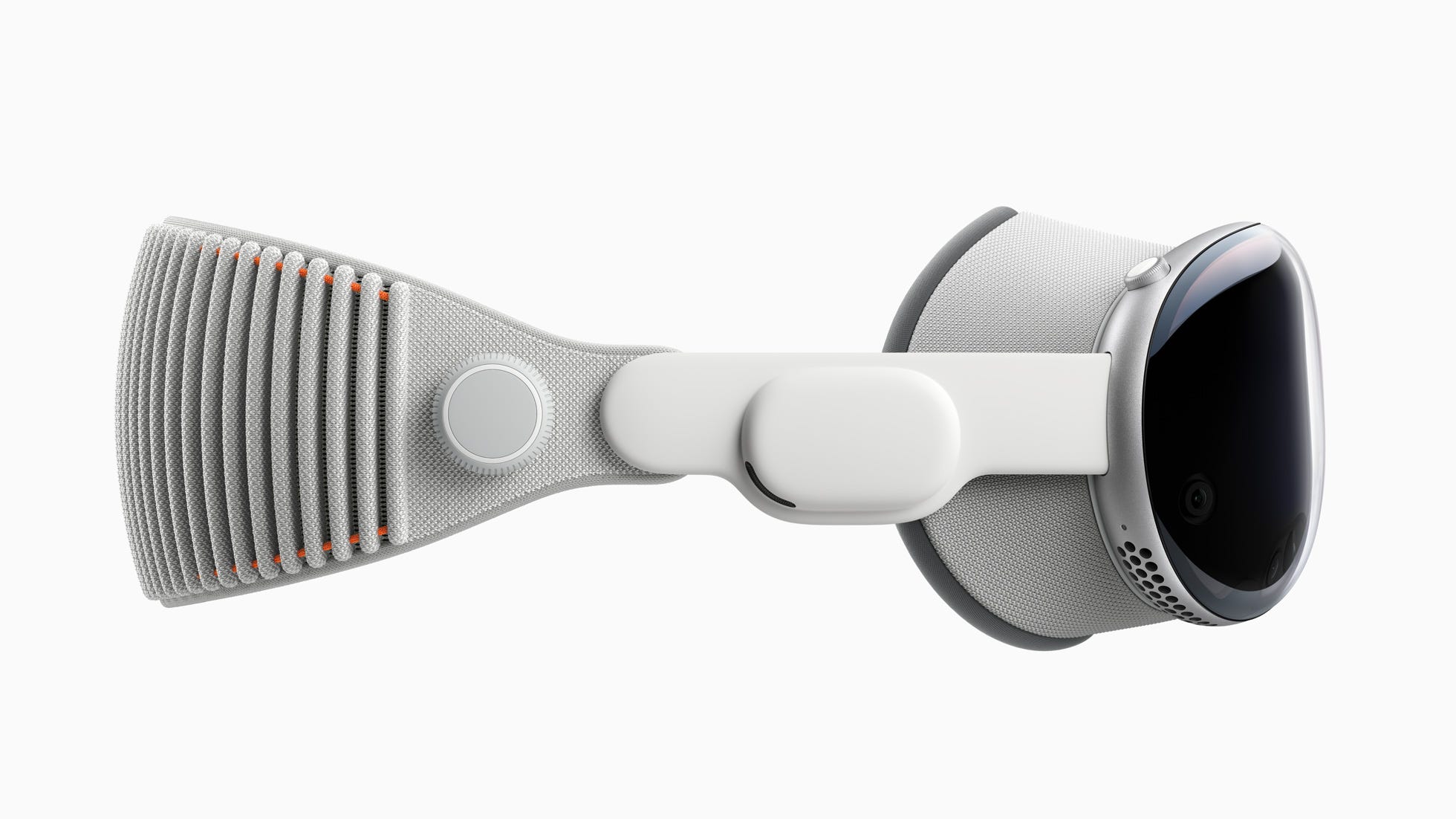
I’ve been hesitant to get the Apple Vision Pro. Why? The price: it starts at $3,500. The Vision Pro seems to be a remarkable device but it’s already 3 years old at this point. I’m waiting for the next model.
An immersive computing platform enabled through visual devices, whether full headsets or eyewear, will emerge as the platform of choice for many uses. It’s still a matter of time before the market is ready. But this post is about the name change of this newsletter and not Apple’s recent announcements, which I should cover separately.
Endless Hybrids
While thinking through a variety of options, I decided to simply name this newsletter after my studio: Endless Hybrids.
I’ve been using Endless Hybrids since 2005. The term originally was found in a sentence in The Language of New Media by Lev Manovich. When I read this sentence, I was inspired.
Manovich contrasts the database paradigm with that of narrative and describes databases and narratives as
“two competing imaginations, two basic creative impulses, two essential responses to the world. Competing to make meaning out of the world, databases and narrative produce endless hybrids.”
I was in my office at the University of Miami. I had to put down the book and go for a walk around the small lake that is the center of campus. That sentence conveyed everything I had been working towards in my work in digital libraries. But I was always more interested in how stories are told (and consumed) through digital media than in the archival management, digitization, and storage of content.
My 20-year journey with Endless Hybrids
I wrote the following on the first version of my Endless Hybrids blog on February 2, 2005, when I was still working as a librarian at the University of Miami.
In the landmark work The Language of New Media Lev Manovich presents the compelling argument that the “[D]atabase becomes the center of the creative process in the computer age”.
The focus of digital library development is primarily the digitization of material into discrete digital objects that can be represented and retrieved through databases utilizing standardized metadata. The library community has made enormous strides in digital library developments. The results are a wide range of databases that support academic research in a variety of disciplines. For libraries, the database has certainly become the primary mode through which digital information is presented to users.
While databases of digital objects are essential to scholarship, the database paradigm should not be viewed as the ultimate end result of library experimentation with digital technologies. Databases alone are merely containers that allow people to access information; in a sense, a database functions in the same way as a library building in that the library building is a container that allows users to access information in print. Of course, all librarians know that libraries are much more than buildings containing books. In the same way, digital libraries need to be viewed as much more than databases containing digital objects. Physical libraries are often defined as much by their services as by their collections. An area of digital library development that is under examined is the ways in which researchers can re-purpose digital objects into new works of scholarship.
Scholarship, whether in the form of a printed article, monograph or digital media, can be described as the gathering, analysis, and re-purposing of information into a new context of understanding through scholarly insight by a researcher. Historically, archives and libraries generally are not involved in the interpretation or publication of printed research by scholars. However, the techniques for presenting the findings of research through digital media are just now evolving. Academic units such as libraries need to work closely with faculty to understand and support how the story of a scholarly research can be expressed through digital media.
In examining print scholarship as a literary genre, one finds that it is essentially driven by a strong narrative supported by references (i.e., footnotes) to primary and secondary sources. This type of narrative-based scholarship is most obvious in the humanities, especially history, but is also very relevant to the social sciences and even the sciences. Narrative is one of the oldest ways of contextualizing information and making it understandable.
The current products of digital libraries most closely resemble reference materials and archival finding aids; indeed, monographic indexes and encyclopedias are essentially databases in printed format. Yet, narrative will surely play a strong role in the future of digital scholarship. The digital culture is in the early stages of utilizing narrative in new media, analogous to the early days of filmmaking when the techniques for effectively telling a story through the new media of that age was just being developed. Indeed, it may be the documentary film rather than the monograph that serves as a better model for the future of digital scholarship.
Narrative in digital scholarship does not supplant the role of databases in digital libraries. Rather, databases should serve as the foundation on which to build narrative-based digital scholarship. Manovich contrasts the database paradigm with that of narrative and describes databases and narratives as “two competing imaginations, two basic creative impulses, two essential responses to the world. Competing to make meaning out of the world, databases and narrative produce endless hybrids.”
Librarians and scholars need to understand more about the capabilities of new media to produce online narratives that are enriched with scholarly digital content that is aurally, textually, and visually stimulating. The growth of digital scholarship is inextricably tied to the means through which digital library databases can be manipulated in order to support the creation of rich and engaging narratives that foster learning.
A month after I wrote that article in 2005, I left my job in Miami and moved to Buenos Aires to start my own business, a design and development firm, and to live life differently. I stepped away from librarianship between 2005 and 2013 but returned as libraries were showing more initiative in digital humanities. During that 2005-2013 period, I lived in Buenos Aires, where I blogged about my walks around the city, and drafted a novel about art and forgery. The latter was an exploration of creativity.
While I did work a while in the digital humanities, including as the founding head of a minor in Digital Culture and Information, my academic career shifted more towards teaching, including courses in writing, multimedia storytelling design (co-taught with a journalism professor) and in data science and artificial intelligence.
It was always what you do with digital information that fascinated me, and not how it was organized and stored. What you do with digital information requires understanding the possibilities. While there’s a lot of pushback against AI, anyone reading this substack knows that AI is a transformative technology. I still believe that 3D real-time graphics are also transformative. Advances in 3D graphics, optics, and AI will create new forms of stories that we do not yet know fully.
Ultimately, I’m interested in creativity and imagination as much as I am with technology. After all, I was an English major at a small liberal arts college in the 1980s. The transformative power of story has never left me. My next post will be on creativity, imagination, and the limits of AI.